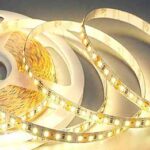
Cutting LED Light Strips: Everything You Need to Know
Part 1. How to Cut LED Strip Lights
Before we delve into this topic, let’s address the burning question: can LED strip lights be cut? The answer is not a simple “yes” or “no.” It primarily depends on the specific product and brand you have. Some LED light strips come with designated cut lines, which makes cutting them a breeze. On the other hand, if your light strip doesn’t have a cut line, it’s best to avoid cutting it altogether.
Now, let’s walk through the process of cutting LED strip lights.
Step 1. Measure the Length
If you find that your LED light strip is too long for your needs, you’ll want to trim off the excess. The first crucial step is to measure the precise length you desire. Be careful not to cut it too short, as you don’t want your efforts to go to waste.
Step 2. Identify the Scissors Logo
To make things easier for users, manufacturers often place a scissors logo on the part of the LED light strip that can be cut. Before you bring out the scissors, locate this logo to ensure you don’t accidentally damage the strip.
Once you’ve located the scissors logo, it’s time to grab a pair of scissors and cut along the marked position. It’s crucial to keep your cut straight to avoid any issues with the functionality of the light strip. A diagonal cut might cause the light to stop working.
Part 2. How to Fix Cut LED Strip Lights
Now, let’s address another common concern. Can you use the remaining portion of a cut LED strip light? Unfortunately, if you’ve already cut a portion off, it cannot be used again. However, if you still need to reconnect the cut strips, there is a solution.
Step 1. Get a Lepro 4-pin LED strip light connector
To reconnect the cut LED light strips, you will need a 4-pin connector. Keep in mind that this connector is often not included with the LED light strip set and needs to be purchased separately. Ensure you choose the right connector size for your LED light strip, matching its width.
Step 2. Open the Connector
If your connector comes with a cover, gently open it to access the connection points.
Step 3. Connect the Light Strips
Take the two cut ends of the LED lights and insert them into the fastening clips of the connector. Remember to follow the provided picture instructions to ensure you’re connecting the right ends.
Step 4. Secure and Test
After placing the light strip, securely close the connector’s cover. With the power supply connected, check if the connected parts light up normally. If not, adjust the connection point between the connector and the light strip until it functions properly.
While reconnecting cut LED light strips may sound like a hassle, it’s best to avoid cutting unless necessary to minimize wastage and potential issues.
Part 3. Using Cut LED Strip Lights
So, you’ve successfully cut your LED light strip and need to put it to use. Here’s how you can do it:
Step 1. Prepare the Wall
If you plan to attach the light strip to a wall, ensure that the surface is dry and clean. Dust or moisture on the wall can prevent proper adhesion.
Step 2. Attach the Light Strip
Peel off the covering on the 3M super glue at the back of the light strip and carefully stick it to your desired position on the wall.
Step 3. Connect the Light Strip
If you purchased a LED light strip set, it should come with a connector and a controller. Connect the light strip to the controller using the provided connector. Pay attention to the correct orientation, as incorrect insertion can cause malfunctions.
Step 4. Power On
Plug the controller into the power supply and switch it on. Voila! Your LED light strip should light up beautifully.
If, after following these steps, your LED light strip still refuses to light up, double-check your connections. If everything seems in order, it’s possible that the strip was damaged during the cutting process. Remember, always cut along the designated logo to ensure the strip’s functionality.
With these tips in mind, you can confidently cut and use LED light strips to add a touch of ambiance to any space.